The Royal Academy of Dance: helping students give the old Razzle Dazzle
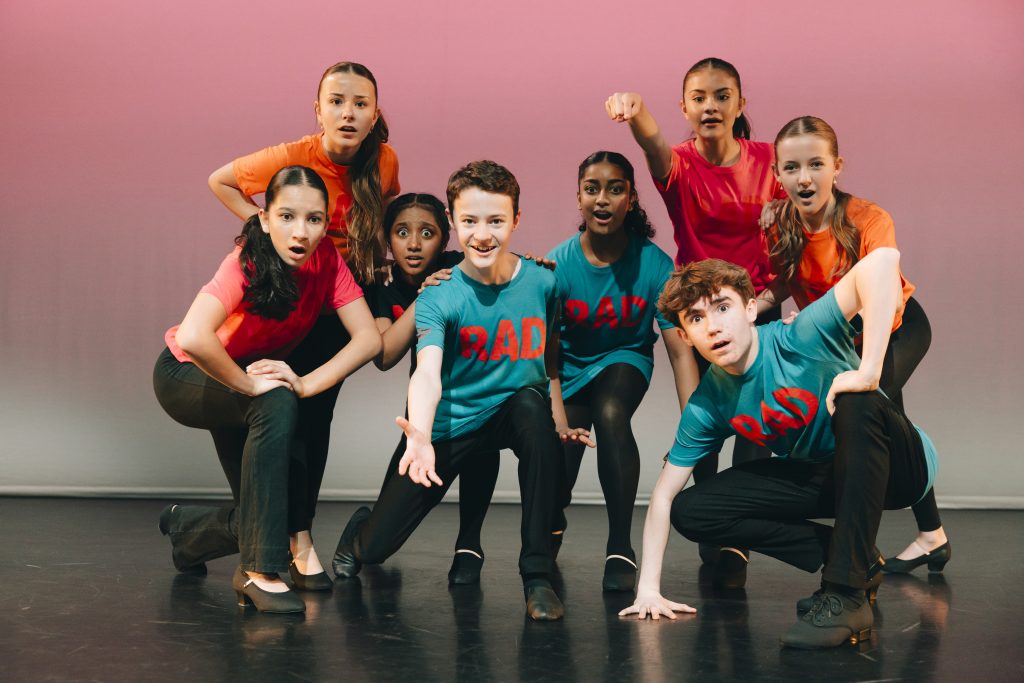
After the announcement of the launch of the Royal Academy of Dance’s new Musical Theatre syllabus, I sat down with Artistic Director Alexander Campbell to learn more
Harrison
The Royal Academy of Dance is over 100 years old now and synonymous with ballet training. So why musical theatre and why now?
Alexander
From my perspective, I know that people who are undergoing ballet training, if they’re exposed to other forms of dance training or performing arts training, are going to be better informed. Musical theatre training will allow them to improve. When we were going through looking at the opportunity that exist in that space, I think there’s an opportunity for us to really highlight and elevate the dance element within musical theatre, which continues to evolve and continues to really need a high, high calibre of performance in the professional setting. For dancers to be able to engage in that version of performing art is something that I think we should be supporting. So I’m really excited about it.
Harrison
You mentioned about the focus on the dance and how that’s going to help develop the ballet dances and feed into musical theatre. Do you think that that’s the current gap in the training that currently exists in terms of musical theatre or that there are other gaps that this provision is hoping to address?
Alexander
I think the area that we would like to really focus on, if there was a gap, would be really that contextual understanding of the work that the students and the teachers are working with. So an understanding of character and understanding of context is really important. But for us, the dance. It’s not that I think, a gap there, it’s just an acknowledgement that really now in this setting, the triple threat performer is almost the norm, which is wild because it’s such a tricky thing to do. But I think the more that we can encourage people that the three elements, singing, acting and dance are equally important. I think it’s an important step for us to support those people.
I think there are a number of different ways to approach it and different people, I think, will have their sense of how they want to approach it. But for us, I think it was important to look at particularly supporting students who are interested in going into the profession. What sort of skills would be most useful for them? What do they need to have by a certain point, when are they looking at vocational training? I think also at the introductory level, having the opportunity to engage with them all equally means that there’s the opportunity to engage a wider group of people because at different stages you have different interests, you might have different strengths as well and it’s where I think we are more likely to see prolonged engagement, which I think is good news for all of us.
Harrison
Musical theatre is quite broad and varied and crosses lots of different genres. How do you prepare the students, not just for what was, but what is next, as the next generation of musical performers?
Alexander
I think if you were to follow this, we’d hope that it would support people to then become the next generation of performer. But I think even as importantly as that is where we’re really wanting to encourage and sort of foster is the next generation of audience members to have an understanding and appreciation of the intricacies, the interests that exist within it. I think a deeper understanding and appreciation and love for means you’re more likely to engage with it or seek to engage with it, whether that’s doing it yourself, teaching it, or going to watch it. I think that all of those things are equally important, certainly for us. And my sense is that the more, opportunity we have to understand the thing that you’re doing, to have, deeper appreciation of it, I think that leads to better engagement, giving you ownership of it.
Harrison
Musicals are sometimes seen as perhaps a lesser of an art form than perhaps opera and ballet. Do you think that’s something that’s shifting and is changing at the moment?
Alexander
Yes. The calibre of performer, the engagement that people have with musicals, the fact that it generates billions of pounds in terms of economic output for countries is a testament to that. And I think the performance levels that you see, not just on Broadway and the West End, but in settings around the world, the calibre is really, really high. So, the reality is that those people are undergoing incredibly rigorous training. They’re having to be right at the top level. So yeah, it’s right up there.
Harrison
The course supports students with the development of a portfolio and helping students cope with things like self-tape auditions, which is very, very 21st century, very post-COVID. Are there other things that you feel that because you’re starting from now, you’ve been able to catch up with the times to make sure that what you’re delivering is current, contemporary, relevant, to your students?
Alexander
We started from the point of what the students need today. And one thing that came up as we were going through, in the last few years, the first audition is a self-tape and we were all reflecting and having a good laugh about how the first stab at a self-tape was versus maybe what it is now. And actually, that would be really, really valuable to address that stage in their development because that is the reality. of today. And we would always look to evolve that as things continue to progress.
What’s happening with technology is happening quickly and it’s important to us to be able to support teachers, be able to prepare students for the reality of what they’re going to be expected to do. But I think even more widely, it’s not just about those that are going into that professional track. There are other useful skills within the syllabus and the assessment that is designed to support people’s confidence, the teamwork. We talk about transferable skills in dance a lot, but in this sense, I think it is really, the reality of getting up and presenting, sharing your level of knowledge or your level of attention verbally is something that, with the advent of AI, we’re really seeing in terms of assessments of programmes in higher education. That ability to verbalise what you know is becoming increasingly attractive when people are trying to work out whether something’s been AI generated or not.
We live in a world where we’re told to question things a little bit more. That authentic voice sometimes gets a bit lost with emails, with AI, etc. So having that skill is brilliant and we encourage that from the beginning, so it doesn’t become something that, all of a sudden, we have to do at grade 5 or grade 6. You have been encouraged to do that at an earlier stage, at a lower level, and then it threads through so that by the time you get there, it doesn’t feel like a whole other thing that you have to start to engage with. It’s something that we’ve been fostering and encouraging throughout.
Harrison
What is it particularly that is exciting about this next generation of the musical theatre performers that are coming through, that are going to take on your syllabus and graduate in three years’ time? What do you hope to see from them?
Alexander
I think that real understanding and appreciation of the work that they’re engaging with and presenting. I think performers, there are a lot of really great performers and then there are exceptional performers.
But I think that understanding of what you’re doing, that contextual understanding, what you’re trying to portray. So not just, I’m a character who is sad. I am sad because I am responding in this way, because I’m set in the 1950s. Having all of that information builds up into that portrayal of a character or that performance of a song or a dance, or all of it, together. That’s what I would like to see, because that, I think, makes exceptional performance.
I also think it’s an opportunity for different strengths and skill sets to be at the forefront. We’ve had already in the trial examinations that we’ve run some brilliant examples of project work, including a set design for Shrek. It was all made out of cardboard and toilet paper rolls and it was amazing. They would have done really well in that element the assessment, all of those other things aside. So you’ve got opportunity present experiences in other areas that are equally important to the musical theatre. That’s what I would like, for people to have a greater appreciation and understanding of the thing that they’re engaging with, as well as being brilliant and all the rest of it. But to have that love of it and appreciation, that would do me.
Harrison
Now, perhaps the most difficult question of all, obviously we’re talking about musicals and musical theatre. What are your favorite musicals?
Alexander
I remember being in the car with my grandmother driving. We used to drive to my ballet classes and she would put songs by Peter Allen on. And I was like, who is this person? What is it? And so I remember when the Boy from Oz came out, I went and saw that and I just loved it. I just thought, oh my God, how amazing. So when I think about, if I had the chance to go and see something, probably because I’d like to go with her, that’s one that always stands out.
I love the Fosse ones. I also have a very sort of core memory almost of going to see Chicago with my dad, who was big into sports in Australia, and I did ballet, and he was very supportive, but we often didn’t have the opportunity to come together. And he, sharing his absolute wonder at this show and the way they were dancing and what it was all about. We spent a lot of time going between, cricket and dance in the car. We would often listen to the Chicago soundtrack. And that’s something that I did with my dad, which wasn’t a thing that I thought we would be doing.
So yeah, Boy from Oz and Chicago, two sort of cool ones. But look, there are a lot, aren’t there?
Teachers interested in teaching the new Musical Theatre syllabus should visit the Royal Academy of Dance’s website to learn more: https://www.royalacademyofdance.org/teach-with-the-rad/teach-musical-theatre/
Teacher training courses are available via the RAD in July 2026 (London, UK), October 2026 (Manchester) and January 2027 (Birmingham).
International training will be available in Canada (July 2026) and Australia (October 2026).
Musical Theatre classes and examinations will be available to book from September 2026.
UK Theatre Network
Currently Booking
From West End favourites to touring productions, discover what’s on and find your next night at the theatre.
English National Ballet - Romeo & Juliet
Irresistible attraction, all-consuming passion, tragic consequences: Shakespeare’s heartbreaking tale is reimagined in a ballet that is “as vital, as alive…
From £15.60
View DatesSmile Together 2027
Join Smile Productions for Smile Together, an uplifting celebration of dance and performing arts at the iconic Liverpool Empire Theatre.
From £35
View DatesUkrainian National Opera presents Madama Butterfly
Ukrainian National Opera® presents Madama Butterfly performed by the Dnipro Opera, Ukraine.
From £17.68
View Dates